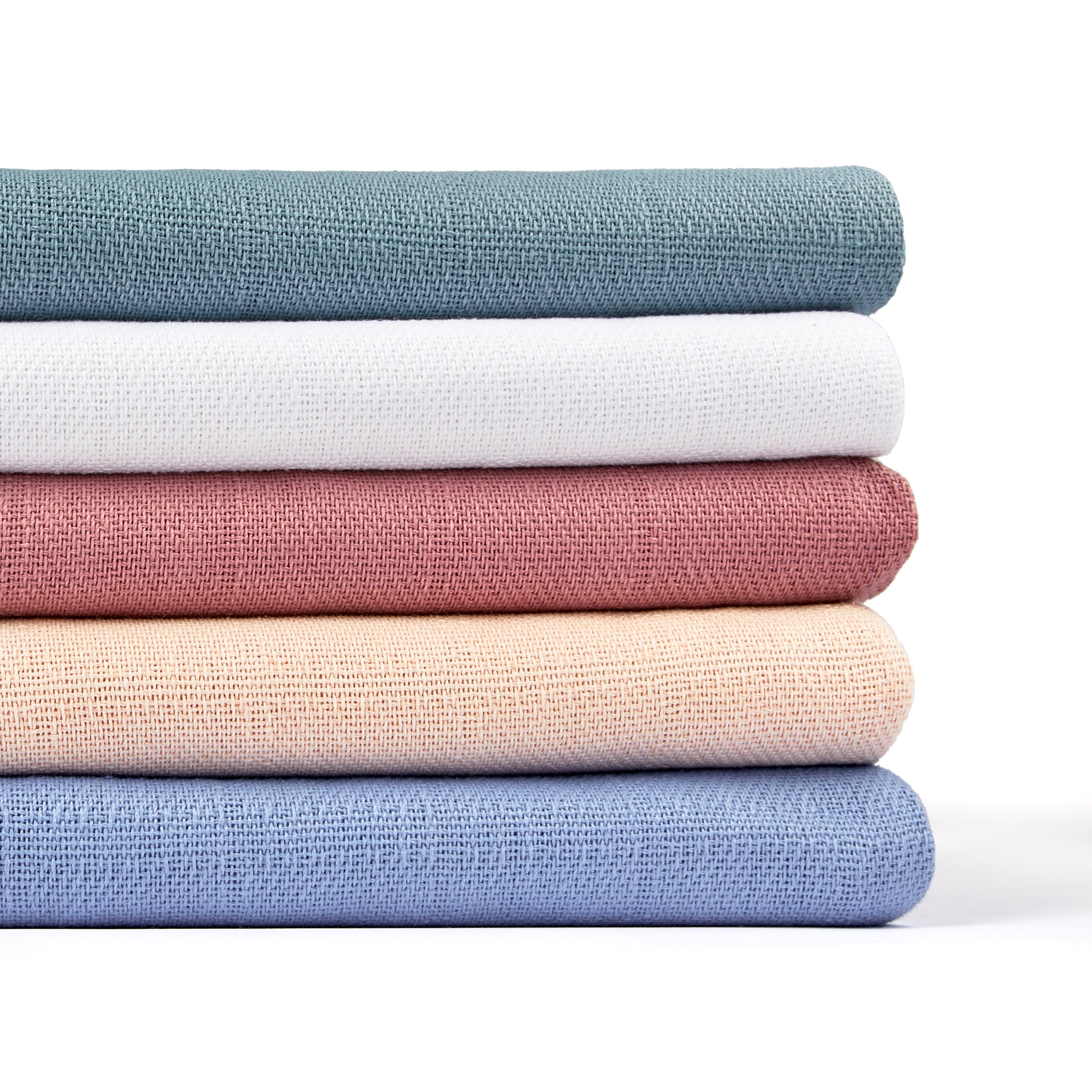


Check out our hospital bath blanket collection page!
If you are shopping for a "hospital bath blanket," you may be looking for one thing: a light, simple blanket that helps someone stay covered, comfortable, and warm during care. This guide explains what it is, how people use it, and what to look for before you buy.
What is a hospital bath blanket?
A hospital bath blanket is a lightweight blanket used to give privacy and warmth during a bed bath or a linen change, especially when a person needs to stay in bed (Osmosis).
Common size, weight, and materials you will see
One common listing you will see is a 70 inch x 90 inch bath blanket at about 1.4 lb, often made with cotton and a soft, napped finish (McKesson).
What "unbleached" means
When a listing says "unbleached," it means the fabric was not made whiter or lighter by a bleaching process (Merriam-Webster).
What "napped" means
When a blanket is described as "napped," it means the fabric surface has been brushed so it has a raised, softer feel (Encyclopedia.com).
Bath blanket vs hospital thermal blanket vs bath sheet
These items get mixed up because the names are similar, and product pages are not always clear.
|
Item |
What it is |
What it is best for |
|
Bath blanket |
A light blanket used during bed baths and linen changes |
Staying covered during care and quick coverage on a bed |
|
Hospital thermal blanket |
A blanket with a cellular style weave that traps air to help hold warmth while staying breathable |
Extra warmth layers, often for general comfort |
|
Bath sheet |
A towel that is larger than a standard bath towel, so it wraps more of the body |
Drying off after a shower or bath |
Note: A bath blanket is for coverage and warmth. A bath sheet is for drying.
5 practical uses for a hospital bath blanket
Here are five practical ways you can use a bath blanket at home or during a care routine.
1) Privacy during a bed bath
Many nursing bed bath procedures include placing a bath blanket over the person while the top sheet is removed, so the person stays covered (Maryland Department of Health).
At home, a simple approach looks like this:
-
Keep the blanket over the chest and legs.
-
Fold it down only as much as needed for the area you are washing.
-
Bring it right back up when you are done.
2) Light warmth layer when someone gets chilly
In healthcare settings, bath blankets are often used as an extra bed layer, and they may also be used for light propping or positioning tasks.
When this is helpful at home:
-
Someone gets chilly during a quick wash-up.
-
You want a light layer for naps.
-
You want something that is easy to fold and store.
3) Coverage during linen changes
To keep the person covered while you swap sheets, keep the bath blanket on top and move it with the person as they roll side to side.
Tip: Roll old linens inward so the dirty side stays inside, and keep clean linens separate until you are ready to pull them across.
4) Gentle propping for comfort
That same light blanket can be folded for small comfort changes, like a soft fold between knees or under an arm.
Keep it safe:
-
Use folds for comfort, not for firm support.
-
If someone has pain, swelling, skin issues, or a medical device, follow the care plan from their clinician.
5) A simple backup blanket for the house
You can also keep bath blankets as spare household blankets because they are easy to store, easy to grab, and not too bulky.
Easy ideas:
-
Keep one in the car for travel or cold offices.
-
Use it as a quick couch throw.
-
Pack one for a family member who prefers their own bedding when staying overnight.
How to choose the right hospital bath blanket
When you shop, focus on a few details that show up on most product pages.
1) Material
Most listings will tell you whether the blanket is 100 percent cotton or a cotton blend. If you are not sure what you prefer, start with the feel on bare skin, then think about how often it will be washed.
2) Size
Start with the job you want it to do. Full bed coverage needs a larger blanket. For a chair, lap, or quick shoulder wrap, a smaller blanket can be easier.
3) Color
If you want the classic look, check for white, blue stripe, or unbleached natural tones. Color does not change how the blanket works, but it can change what stains show and how it looks in a guest room.
4) Pack size
Some sellers offer single blankets, and others sell bulk cases. If you are buying for a household, you can usually start with one or two and add more if they end up being useful.
Care and washing basics
Care instructions can vary by brand, so always check the care label first. In the U.S., the FTC explains that the Care Labeling Rule requires care instructions on certain textile goods, which is why checking the label matters (FTC).
Still, these general ideas are a good starting point.
Handling used blankets safely
CDC guidance for laundry and bedding says used linens should be handled in a way that avoids contaminating the environment, and it also calls out that shaking can spread contamination (CDC).
A practical way to use that at home:
-
Roll used blankets inward so the soiled side stays inside.
-
Carry them away from your clothes.
-
Wash hands after handling.
Do not shake used linens
A long-term care laundry tip sheet also advises: "Do not shake linen," because movement can spread germs into the air (AHCA/NCAL).
Washing and drying
A consumer blanket washing guide recommends following the care tag and picking washing and drying settings that match the fabric (The Spruce).
If the label says "tumble dry low," Real Simple explains that it means using a lower heat setting on the dryer to help prevent damage (Real Simple).
Storing clean blankets
A state infection prevention laundry card describes handling clean linen in a way that keeps it clean during storage and transport (North Dakota Health and Human Services).
At home, that can look like:
-
Store clean blankets in a dry closet or bin with a lid.
-
Keep them off the floor.
-
Separate clean from used.
Where Trusted Thread fits
Trusted Thread sells hospital bath blankets in an unbleached, 100 percent cotton option with a 70 x 90 size (Trusted Thread).
FAQ
1) Are hospital bath blankets always 70 x 90?
No. You will also see other sizes listed.Use your bed size and the person’s height as your guide.
2) What is the difference between a bath towel and a bath sheet?
A bath sheet is the larger option, and it gives more wrap-around coverage than a standard bath towel (Forbes Vetted). A bath blanket is different because it is meant for coverage and warmth, not drying.
3) What makes a hospital thermal blanket different?
Thermal blankets are often described with a cellular or leno style weave, which is designed to trap air for warmth without using a thick, heavy build. That weave is a big reason they look and feel different from a bath blanket.
4) How do you use a bath blanket during an occupied bed linen change?
A common CNA skill flow is to place the bath blanket over the person, then remove the top sheet from underneath so the person stays covered (CNAclasses.com). Go slowly, keep the person informed, and stop if they feel dizzy or short of breath.
5) Can a bath blanket be used as a lift sheet?
It should not be used for lifting. One set of general linen guidelines states that bath blankets should not be used as a lift sheet (General Linen Guidelines PDF). If you need to move someone in bed, use a proper transfer device and follow the care plan.


![Hospital Bath Blanket Sizes: 4 Standard Options [2026]](http://trustedthread.com/cdn/shop/articles/Hospital-Bath-Blanket-Sizes_-4-Standard-Options--_2026_c6e7ba00-353b-41ea-aa8b-c37f9a9a37fa.webp?v=1768287055&width=800)


![Bath vs Thermal Blanket: 6 Stocking Tips [2026]](http://trustedthread.com/cdn/shop/articles/Bath-vs-Thermal-Blanket_-6-Stocking-Tips-_2026_612918c3-01c3-4d4d-9324-4f9bd431bcf8.webp?v=1768284594&width=800)
