
![Bath vs Thermal Blanket: 6 Stocking Tips [2026]](http://trustedthread.com/cdn/shop/articles/Bath-vs-Thermal-Blanket_-6-Stocking-Tips-_2026_612918c3-01c3-4d4d-9324-4f9bd431bcf8.webp?crop=center&height=625&v=1768284594&width=1000)
Check out our hospital bath blanket collection page!
If you run a spa, hotel, clinic, or care home, you already know the real challenge: comfort and turnover. You need textiles that feel good, move fast through laundry, and are easy for staff to grab—every shift.
This guide compares bath blankets and thermal blankets, then gives you 6 simple stocking tips you can put to work right away.
Quick answer: which one should you stock?
-
Stock bath blankets when you need coverage and quick comfort right after bathing, rinsing, or a wipe-down.
-
Stock thermal blankets when you need a light, breathable warmth layer for beds, lounges, or drafty hallways.
-
Stock both if your guests or patients move between wet-care moments (bath/cleanup) and resting moments (bed/recovery).
Best use cases at a glance (by facility type)
-
Spas & salons: bath blankets for treatment room resets; thermal blankets for lounge areas and cooler seasons.
-
Hotels & hostels: thermal blankets for beds and common areas; bath blankets for pool days or cold bathrooms.
-
Clinics & birthing centers: bath blankets for exams, bathing help, and transfers; thermal blankets for extra bed layering (per your protocols).
-
Nursing homes: bath blankets for daily care routines; thermal blankets for resident rooms and shared spaces.
Bath blanket vs thermal blanket (comparison table)
|
What you need |
Bath blanket |
Thermal blanket |
|
Right after bathing or cleanup |
✅ Great fit |
⚠️ Not the usual first pick |
|
Warmth without heavy bulk |
✅ Light comfort |
✅ Light comfort |
|
Breathability for longer rest |
⚠️ Depends on fabric |
✅ Typical strength |
|
Fast grabs for staff |
✅ Often used on carts |
✅ Often stored on beds/cabinets |
|
Where it usually lives |
Bath area / care cart |
Bed / lounge / closet |
What a “bath blanket” means in real operations
In many care routines, a bath blanket is used as a soft cover during bathing and after-care. UNC’s “Bathing Without a Battle” program describes using a bath blanket to help hold warmth during bathing and to keep someone covered and comfortable afterward (UNC Bathing Without a Battle).
Common places bath blankets earn their keep
-
Treatment rooms (spa/salon)
-
Patient/resident bathing routines (care settings)
-
Exam rooms and transfers (clinical settings)
-
Bathrooms and pool areas (hospitality)
What a “thermal blanket” means (and why it feels different)
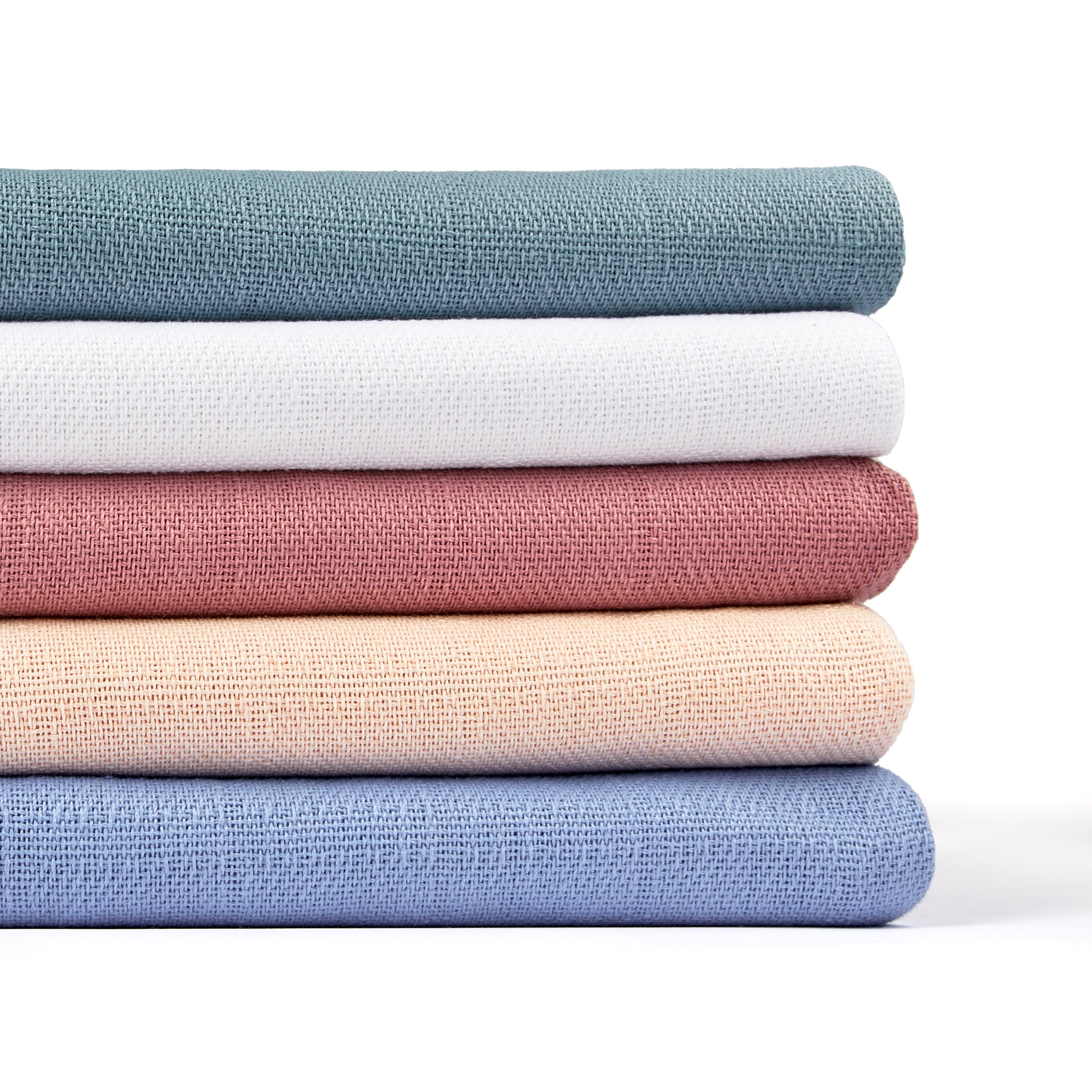
In facility buying, “thermal blanket” often points to a breathable, open-weave style that traps warmth while still letting air move. One common weave type is “leno,” defined as an open weave where warp yarns cross and lock the filling yarn in position (Merriam‑Webster).
Where thermal blankets fit best
-
Beds and sleeper sofas
-
Lounges, waiting rooms, and common areas
-
Drafty hallways or chilly evenings
-
Extra layers for guests who ask for “one more blanket”
How to choose the right mix (5 quick decision checks)
Use these five checks to pick your “default” blanket—and decide if you need both.
-
What’s the moment? Wet-care comfort (bath blanket) vs. longer resting warmth (thermal blanket).
-
How fast do you turn rooms? Faster turnover usually favors simpler, standard choices.
-
How does laundry run today? Sorting, drying time, and how many carts you can move per shift.
-
Where do blankets live? If storage is tight, standardizing sizes and folds matters.
-
When is the risk moment? Transfers, bathing help, and overnight chills often call for an extra layer.
The 6 stocking tips (2026 playbook)
Tip 1: Stock “one for wet care, one for rest”
A clean rule that helps staff move faster:
-
Bath blanket: for bathing, exams, wipe-downs, and quick coverage
-
Thermal blanket: for beds, lounges, and cool rooms
When teams know what each blanket is for, you get fewer “where did they all go?” moments.
Tip 2: Set par levels with a 3-number method
You only need three numbers:
-
Average daily turns (rooms or clients)
-
Days between deliveries (or supplier lead time)
-
Laundry capacity (how much you can wash and dry per day)
A simple baseline: keep enough on hand to cover your daily turns plus a buffer for delivery and laundry gaps.
Tip 3: Standardize sizes to speed up resets
Pick one main size per blanket type when you can. It makes:
-
Folding faster
-
Carts cleaner
-
Training easier
-
Reorders simpler
Tip 4: Plan a “cold-day surge”
Even in the US, weather swings happen. Build a surge plan:
-
Add extra thermal blankets for winter and shoulder seasons
-
Stage overflow stock in a labeled bin or closet
-
Move a small “backup stack” closer to high-traffic areas
Tip 5: Tighten handling rules to protect hygiene
When textiles are soiled, handling matters. OSHA’s hospital laundry guidance for bloodborne pathogens says to handle contaminated laundry as little as possible and to bag or containerize it at the location of use (OSHA hospital laundry guidance).
Tip 6: If you warm blankets, keep it simple—and safe
If you use a warming cabinet, write down the basics: who checks it, when it’s checked, and what items go inside.
The Joint Commission notes it isn’t prescriptive on blanket-warmer settings, and also states that AORN and ECRI recommend a maximum setting of 130°F (54°C) for blanket warming cabinets (The Joint Commission FAQ).
Starter stocking plans (quick examples)
These are starting points. Your mix depends on volume, laundry, and how many spaces you run.
Spa/salon (per treatment room)
|
Item |
Starting range |
|
Bath blankets |
6–10 |
|
Thermal blankets |
2–4 |
Hotel/hostel (per bed)
|
Item |
Starting range |
|
Thermal blankets |
1–2 |
|
Bath blankets |
Shared stash (by bathrooms/pool) |
Clinics/birthing centers (per room + transport)
|
Item |
Starting idea |
|
Bath blankets |
Keep enough for exams, transfers, and bathing help |
|
Thermal blankets |
Keep a small reserve for extra layering (per protocols) |
Nursing homes (per resident + common areas)
|
Item |
Starting idea |
|
Bath blankets |
Steady supply for daily care routines |
|
Thermal blankets |
Resident rooms plus a shared stack for lounges |
Care and laundering basics that protect your investment
Strong processes keep textiles safe and keep costs predictable.
CDC’s laundry and bedding guidance for healthcare settings explains that contaminated textiles can contain microorganisms and highlights the value of standard precautions—especially avoiding practices like shaking soiled linens (CDC laundry and bedding guidance).
Simple habits that help
-
Sort the same way, every time
-
Keep clean items covered in storage
-
Train new staff with a one-page “how we handle textiles” checklist
Shop bath blankets (Trusted Thread)
If bath blankets are the missing piece in your setup, start with a consistent size and a predictable reorder plan.
Shop bath blankets from Trusted Thread when you’re ready to simplify your workflow and keep comfort high.
FAQ (5 questions)
1) Do I need bath blankets if I already stock towels?
If you want more coverage during bathing or transfers, bath blankets are a simple add-on. Many teams keep them on the care cart so residents and patients feel covered while staff works.
2) Why do thermal blankets feel “lighter” but still warm?
Thermal blankets are usually built to feel breathable while still giving warmth. If your space runs hot or cold in waves, that balance can help reduce guest requests for multiple heavy layers.
3) What’s the easiest way to stop blanket shortages?
Pick a clear “minimum stack,” and assign someone per shift to check it. When the minimum is visible and owned, you spot gaps early.
4) What should we do with laundry that may be contaminated?
Follow your infection-control and bloodborne-pathogens procedures, and train staff to handle soiled items gently and consistently. Clear steps beat guessing, especially on busy shifts.
5) If we use a blanket warmer, what should be in our policy?
Keep it short: who is responsible, when checks happen, what items go inside, and how you record it. A simple policy makes training easier and supports safer routines.


![Hospital Bath Blanket Sizes: 4 Standard Options [2026]](http://trustedthread.com/cdn/shop/articles/Hospital-Bath-Blanket-Sizes_-4-Standard-Options--_2026_c6e7ba00-353b-41ea-aa8b-c37f9a9a37fa.webp?v=1768287055&width=800)


